
Quick Summary
This guide outlines the critical steps for ceiling water damage repair in Mount Vernon, explaining how to contain sudden overhead leaks, prevent structural collapses, and safely manage electrical hazards. As a premier local restoration specialist, Floodline Restoration Co. stabilizes compromised plaster and drywall assemblies while deploying thorough structural drying to eliminate moisture trapped within hidden joist cavities. Readers will understand emergency safety measures, repair scopes, and insurance factors, enabling them to call Floodline Restoration Co. for a 45-minute emergency response or a free visual ceiling inspection.
Ceiling Water Damage Repair in Mount Vernon: Emergency Steps and Cost Factors
When water drips through a ceiling, prompt action is critical. Overhead water leaks present structural hazards, and repair methods vary by ceiling material and building construction. Water trapped inside ceilings can weaken building materials and threaten electrical fixtures. Leak repair, water removal, and drying should begin promptly, preferably within 24 to 48 hours; materials wet longer may require additional mold-remediation evaluation.
Proper evaluation by specialists such as Floodline Restoration Co. helps identify moisture paths behind ceilings to determine the necessary scope of work without unnecessary demolition. Stabilizing saturated areas and drying affected structural materials helps protect the property and prevent secondary damage.
What to Do Immediately When Your Ceiling Leaks
If you notice water pooling or dripping overhead, take these protective steps right away:
- Shut off the water source: If the leak comes from an overflowing appliance or plumbing line, shut off the main water valve immediately.
- Avoid electrical hazards: Avoid contact with water near electrical fixtures. Shut off power to the affected circuit at the breaker panel only when safe to do so. Never touch wet switches or electrical panels.
- Avoid the affected area: Stay clear of sagging or damaged ceilings. Place a container beneath drips only if it is safe to do so. Do not puncture the ceiling.
- Call qualified professionals: Contact qualified professionals or emergency services when structural collapse or electrical hazards are suspected.
What Does Ceiling Water Damage Repair Cost in Mount Vernon?
Because every water intrusion scenario involves different building materials, leak sources, and drying timelines, repair costs vary from project to project. While national restoration averages range widely, there is no verified local government or independent dataset tracking specific average ceiling repair costs exclusively for Mount Vernon, New York.[1]
Key Factors Influencing Your Restoration Scope
Your overall repair scope and cost depend on several specific variables:
- Water Category: Clean water from a supply pipe requires less extensive decontamination than gray water from an appliance overflow or black water from a contaminated source.
- Ceiling Material: Repair methods vary depending on whether the ceiling is constructed of modern drywall, plaster and lath, or other assemblies.
- Moisture Depth: Water that has saturated structural joists, insulation, and subflooring requires extended drying and monitoring.
- Insurance Coverage: Sudden and accidental losses may be covered by homeowners insurance, while gradual leaks, maintenance issues, flood, and other exclusions depend on the specific policy and cause of loss. It is recommended to review the policy and contact the insurer promptly. Larger flood-related projects may involve Mount Vernon, New York, and FEMA floodplain requirements, though not every interior ceiling repair requires a permit.
How Do You Repair Water Damage in Drywall Versus Plaster Ceilings?
Need ceiling water damage repair in Mount Vernon?
We’re available now - call for a fast, free estimate.
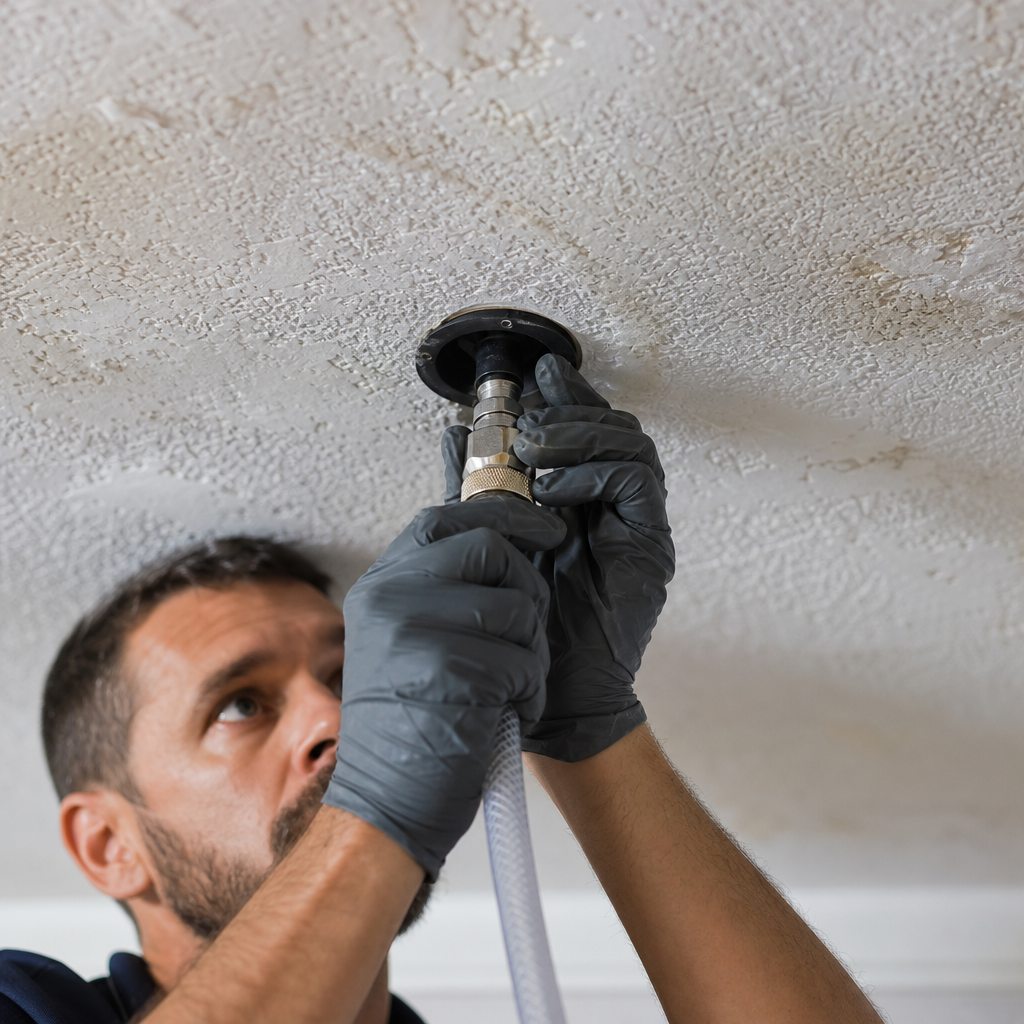
Repair methods vary by ceiling material and building construction, as different assemblies respond differently to water intrusion.
Drywall and Sheetrock Ceilings
Gypsum drywall absorbs moisture when exposed to overhead leaks. Wet drywall may need removal if it is structurally compromised, contaminated, or cannot be dried safely; a professional assessment determines the scope. If the material remains structurally sound and uncontaminated, in-place drying may be possible.
Plaster and Lath Systems
Plaster-and-lath ceilings respond differently to water intrusion than drywall. Water pooling above plaster can weaken the attachment between the plaster and wood lath. Plaster may separate from the lath while appearing intact from below. A professional evaluation by a team like Floodline Restoration Co. determines whether plaster can be safely stabilized and dried or requires removal.
Subfloor and Joist Cavity Saturation
Water can penetrate beyond the ceiling surface into joist cavities, subflooring, and insulation above. If hidden cavities are not thoroughly dried, trapped moisture can cause structural damage and persistent odors. Proper structural drying is needed to remove moisture from framing materials.[4]
Steps for Emergency Water Extraction and Ceiling Restoration
A systematic restoration process, as recommended by Floodline Restoration Co., halts progressive decay, protects indoor air quality, and prepares your property for clean reconstruction.
-
Phase 1: Emergency Containment and Stabilization
Affected areas are isolated to protect unaffected parts of the building. Saturated materials and damaged ceiling sections are stabilized to reduce safety hazards.
-
Phase 2: Moisture Assessment and Structural Drying
Moisture levels are evaluated across ceiling surfaces and framing cavities. Drying equipment is deployed to remove moisture from affected structural materials.
-
Phase 3: Repair and Reconstruction
Once materials are sufficiently dry, necessary repairs and reconstruction are completed, which may include replacing drywall, repairing plaster, and refinishing surfaces.
Can a Sagging Water-Damaged Ceiling Be Saved or Must It Be Replaced?
Whether a ceiling can be saved or must be replaced depends on moisture damage, structural integrity, material type, and contamination.
Warning Signs of Imminent Collapse
If you see any of the following warning signs, evacuate the area beneath the ceiling immediately:
- Pronounced pillowing or bulging in drywall panels.
- Cracking or crumbling plaster falling from the ceiling.
- Water pooling or dripping through overhead light fixtures.
- Sounds of creaking, cracking, or popping from the ceiling framing.
When Drying in Place Works
If water is uncontaminated, addressed quickly, and the ceiling material retains its structural integrity without sagging or pulling away from framing, drying in place may be possible followed by surface repainting.
When Sectional Replacement Is Required
Wet drywall may need removal if it is structurally compromised, contaminated, or cannot be dried safely; a professional assessment determines the scope. Saturated insulation and damaged framing materials may also require removal or replacement.
Frequently Asked Questions About Ceiling Water Damage
How much does ceiling water damage repair cost?
Project costs depend on the water source, affected area, whether plaster or drywall is involved, and how deep moisture penetrated the structural framing. There is no verified dataset tracking average ceiling repair costs specifically for Mount Vernon, New York, and an onsite professional evaluation is needed to determine the repair scope.[2]
How quickly should ceiling water damage be repaired to prevent mold?
Leak repair, water removal, and drying should begin promptly, preferably within 24 to 48 hours. Materials wet longer may require additional mold-remediation evaluation.
Does homeowners insurance cover water leak damage to ceilings?
Sudden and accidental water losses may be covered by homeowners insurance, while gradual leaks, maintenance issues, flood, and other exclusions depend on the policy and cause. Occupants should review their policy and contact their insurer promptly.[3]
How fast can a restoration crew reach my property?
Response times depend on contractor availability, location, and the severity of the situation. Contacting qualified restoration professionals like Floodline Restoration Co. promptly helps minimize progressive moisture damage and structural hazards.
Need ceiling water damage repair in Mount Vernon?
We’re available now - call for a fast, free estimate.
Sources
- Section 9.2: City of Mount Vernon – planning.westchestercountyny.gov (2014)
- How to Search the Invisible Web in 2026: Professional Guide – aofirs.org (2026)
- Water Damage Statistics and Information – thisoldhouse.com (2025)
- Homeowners Insurance Claims Statistics | 2026 Edition – zipdo.co (2026)
Frequently Asked Questions
How do specialists locate hidden moisture inside ceiling cavities without tearing down the entire ceiling?
Restoration professionals use non-invasive thermal imaging cameras and precision moisture meters to trace hidden water paths and pinpoint trapped moisture behind drywall or plaster. Floodline Restoration Co. utilizes these diagnostic tools across Mount Vernon to locate hidden subfloor leaks and dry structural joists without causing unnecessary demolition.
What immediate steps should be taken if water begins dripping through an overhead ceiling light fixture?
Switch off power to the affected electrical circuit at the main breaker panel immediately, and avoid touching any wet light switches or fixtures. After securing the electrical hazard, call Floodline Restoration Co. at their 24/7 dispatch line for a 45-minute emergency response to safely contain the water and prevent structural collapse.
Can a water-damaged plaster and lath ceiling be saved without full replacement?
A water-damaged plaster ceiling can often be preserved if the plaster has not separated from the underlying wood lath and the moisture is treated quickly. Floodline Restoration Co. offers free visual ceiling inspections in Mount Vernon to evaluate plaster adhesion and determine whether structural stabilization and in-place cavity drying can safely salvage the assembly.
About the author
 |
Sarah O’Connor Sarah is an IICRC-certified Water Damage Restoration Technician with over eight years of experience managing residential and commercial property emergencies. She holds a Bachelor of Science in Environmental Science from SUNY Purchase, which informs her approach to safe and effective mold remediation and decontamination. Sarah specializes in creating clear, actionable guides to help property owners navigate emergency recovery and the complexities of insurance claims. |
Water damage, flood, or mold emergency?
We’re available now - call for a fast, free estimate.
Call Now - Free Estimate