
Free visual inspection and a written scope of work before any mitigation begins - photos, moisture readings, and drying logs go in your claim file
The scope we write is the scope we bill. Anything new gets shown to you, in writing, before we touch it.
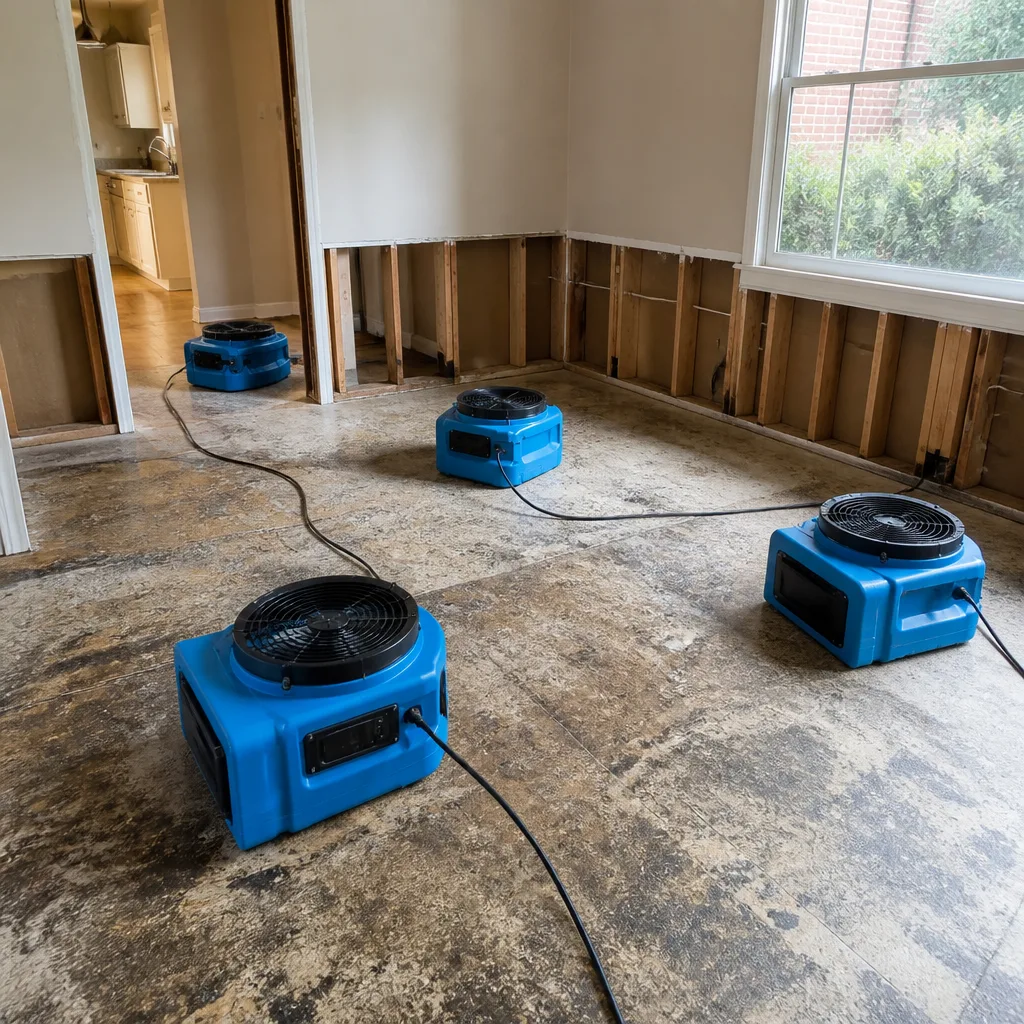
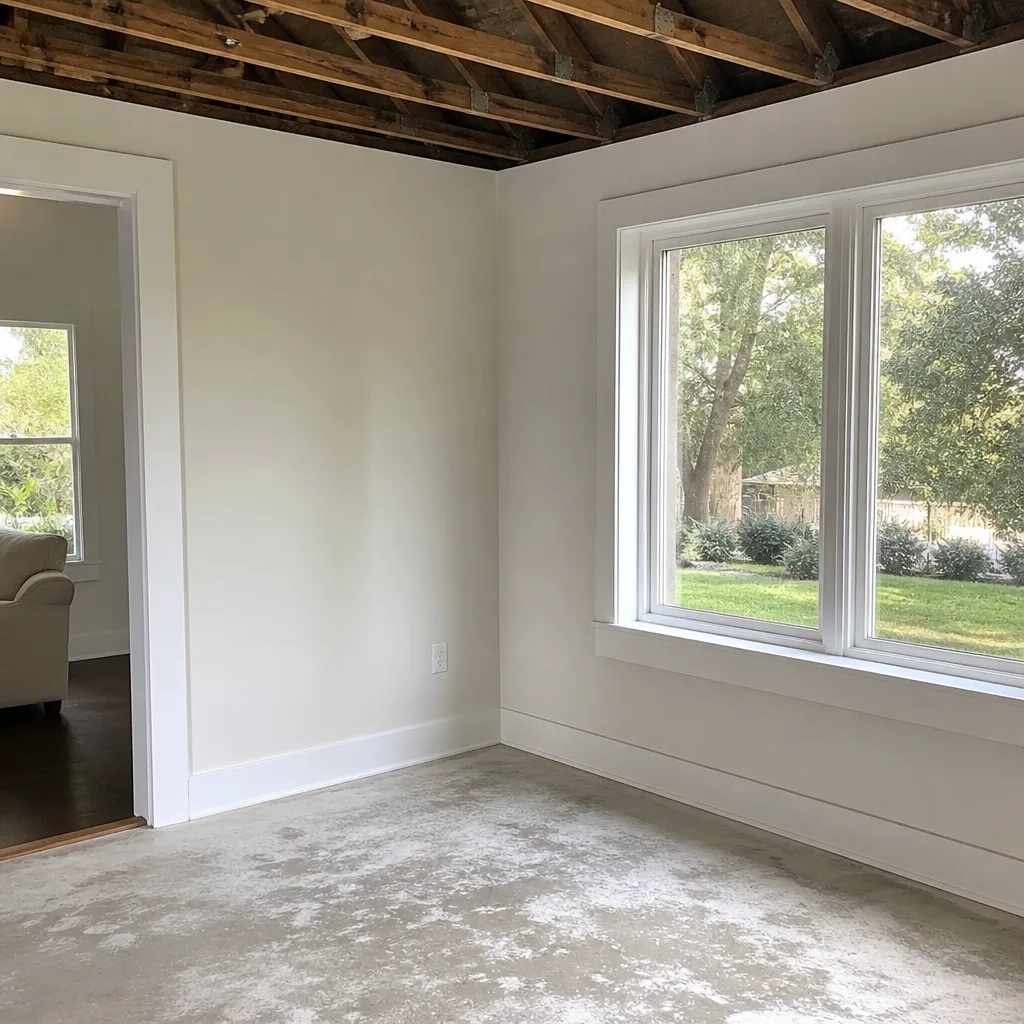
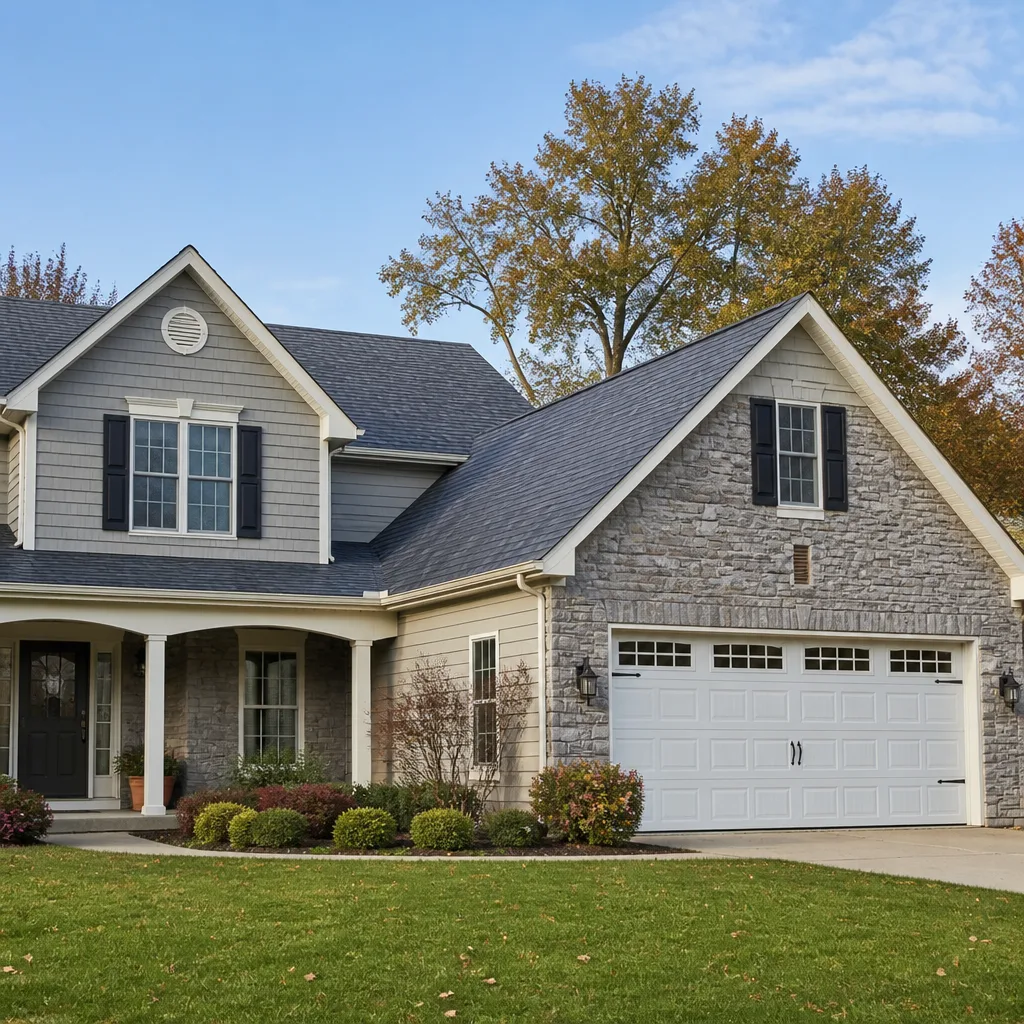
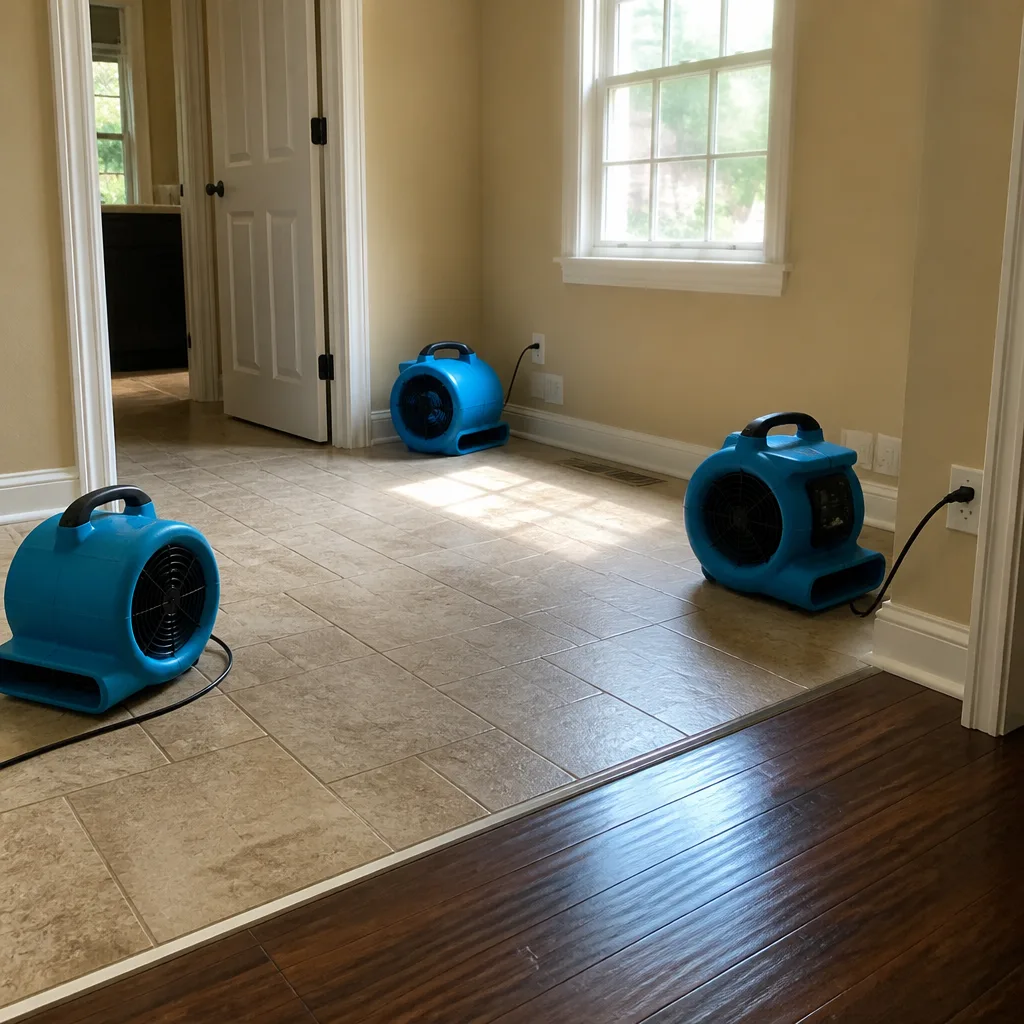
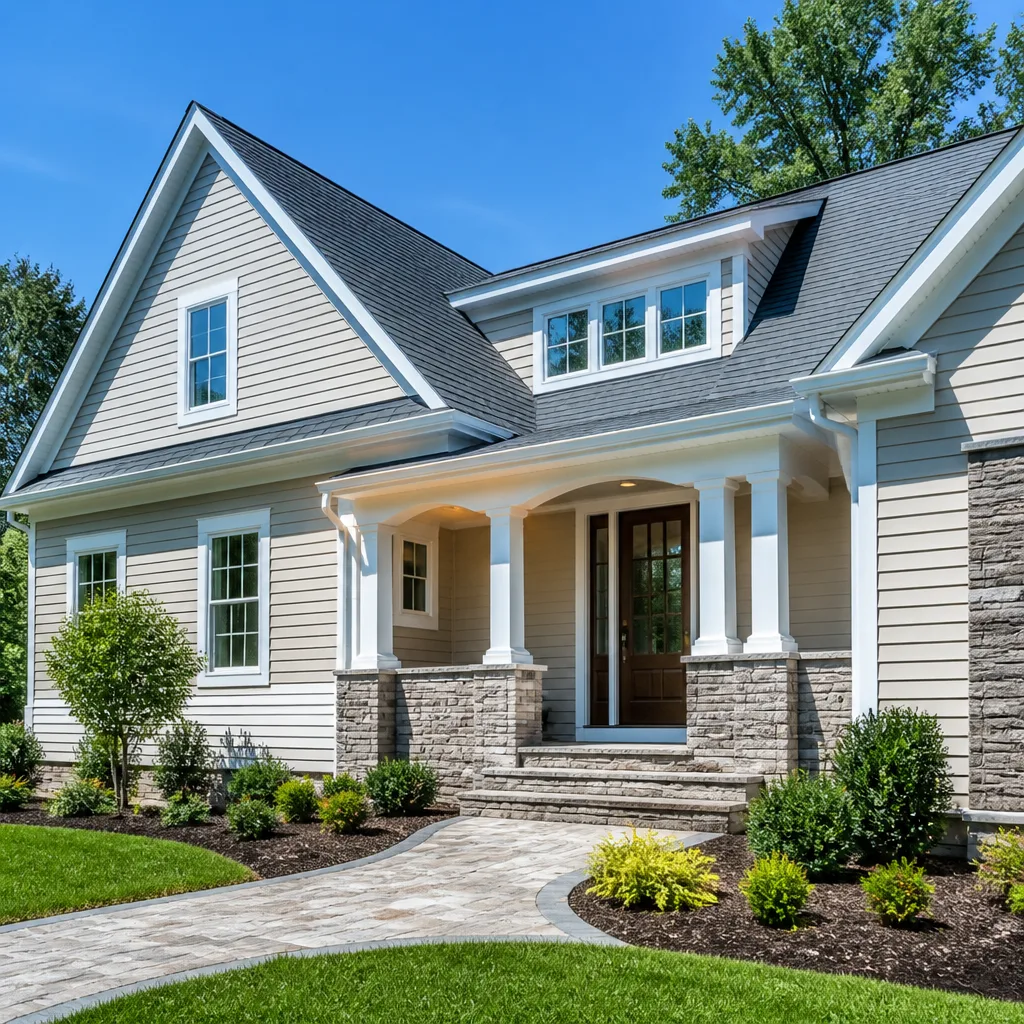
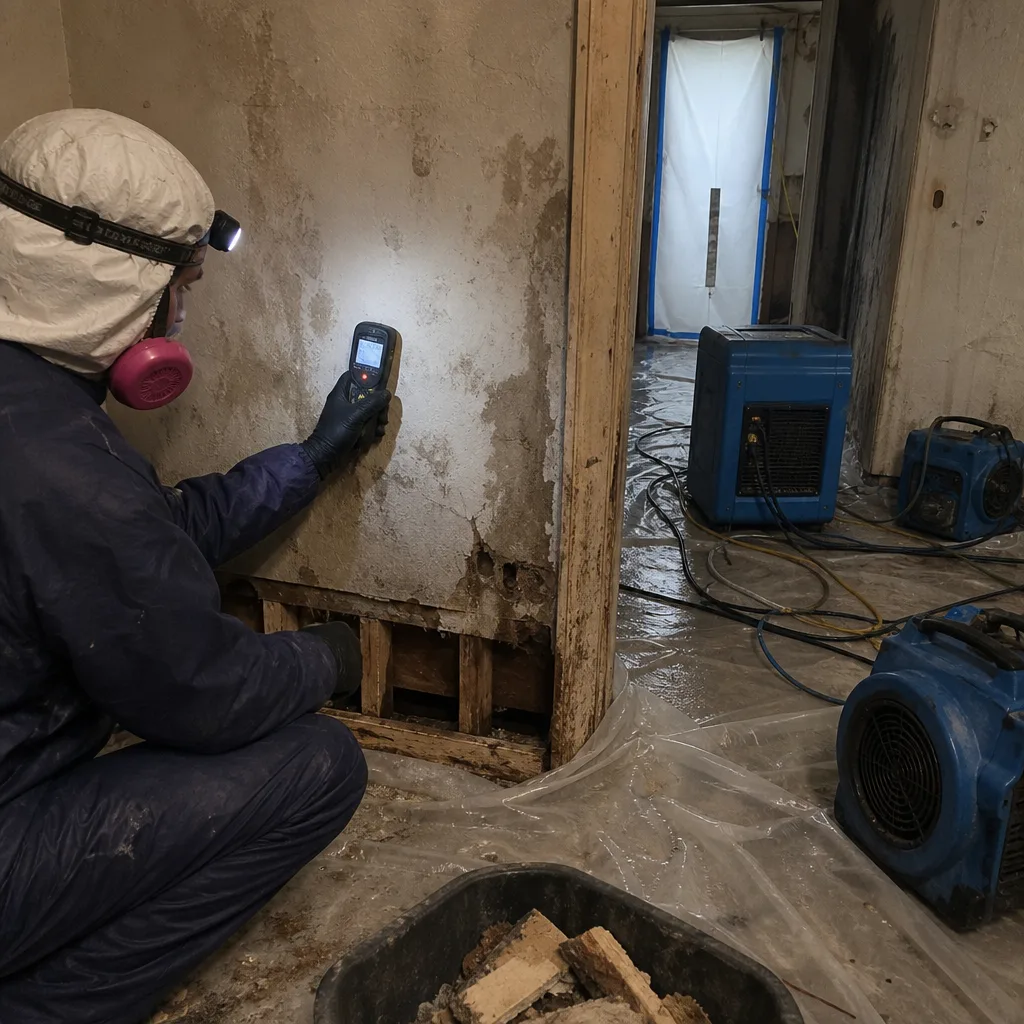 Before
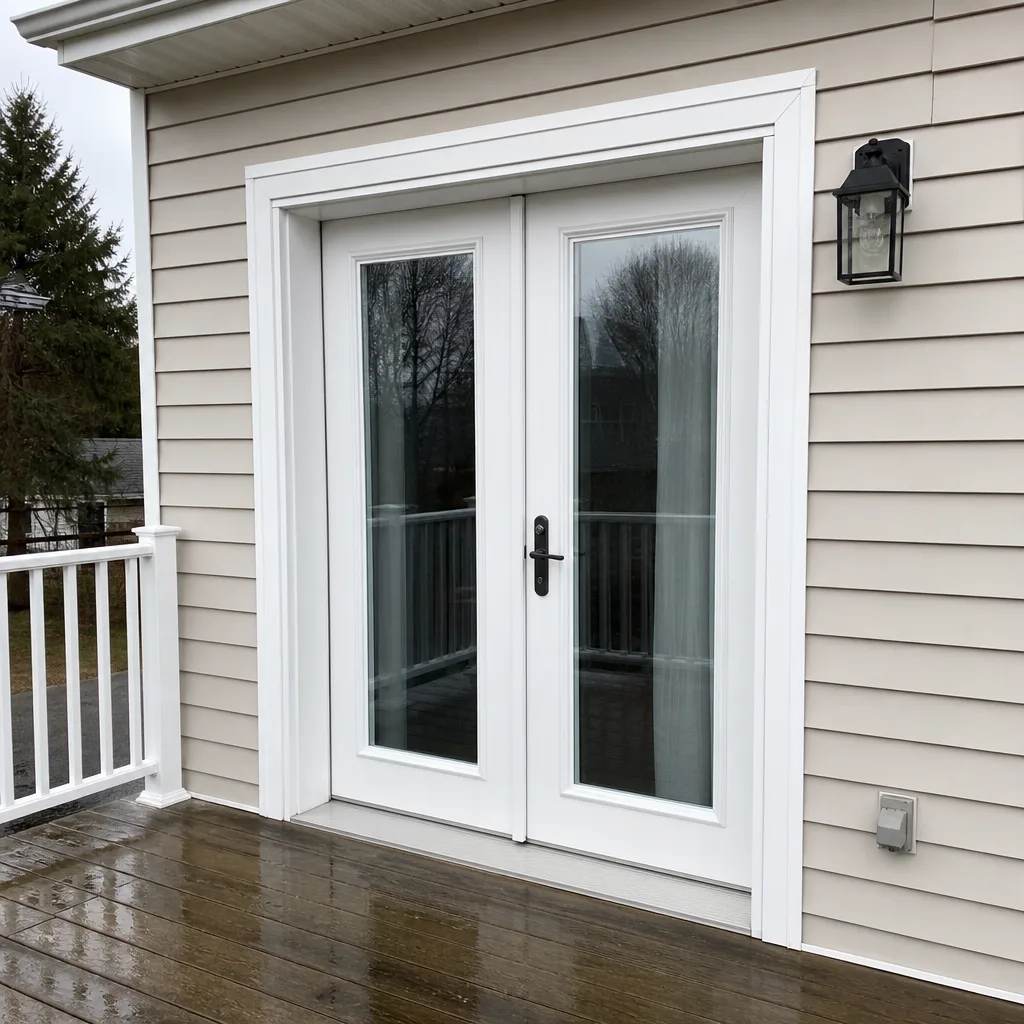 After
After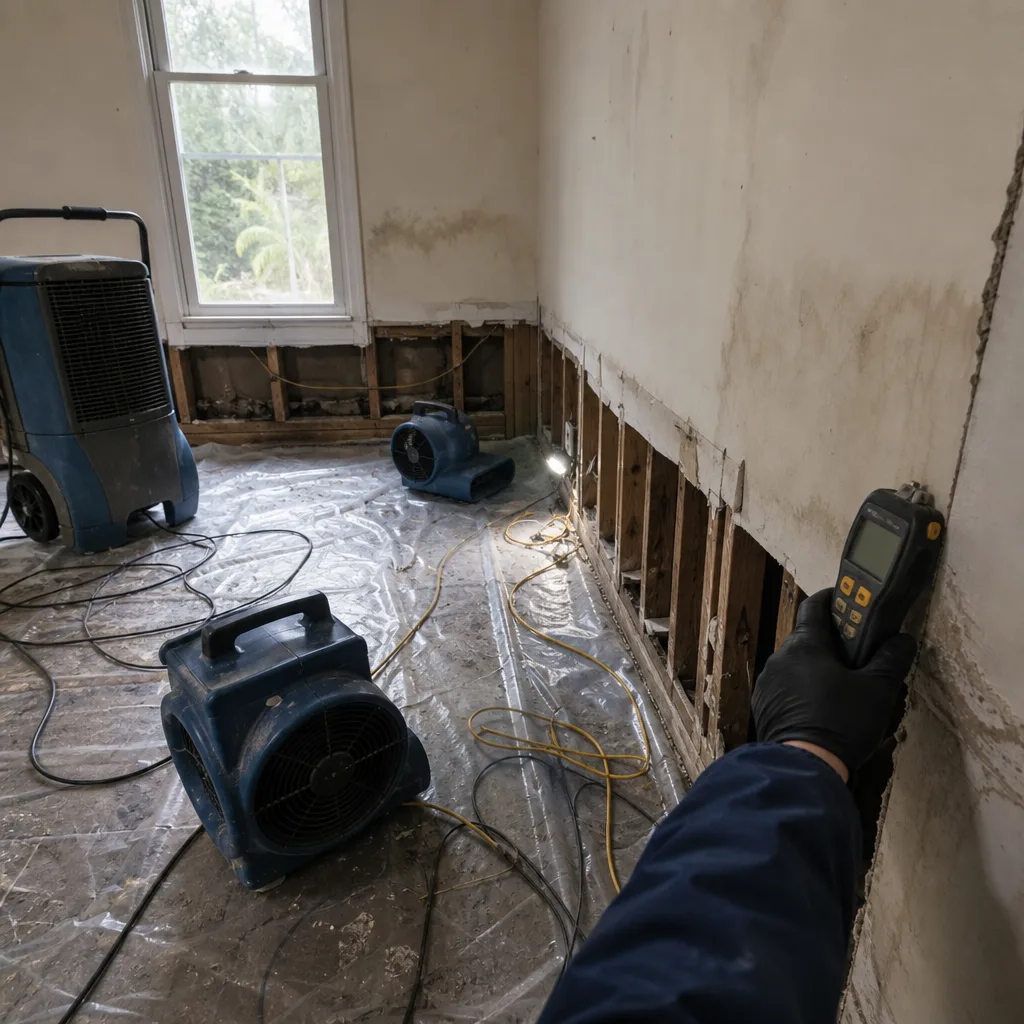 Before
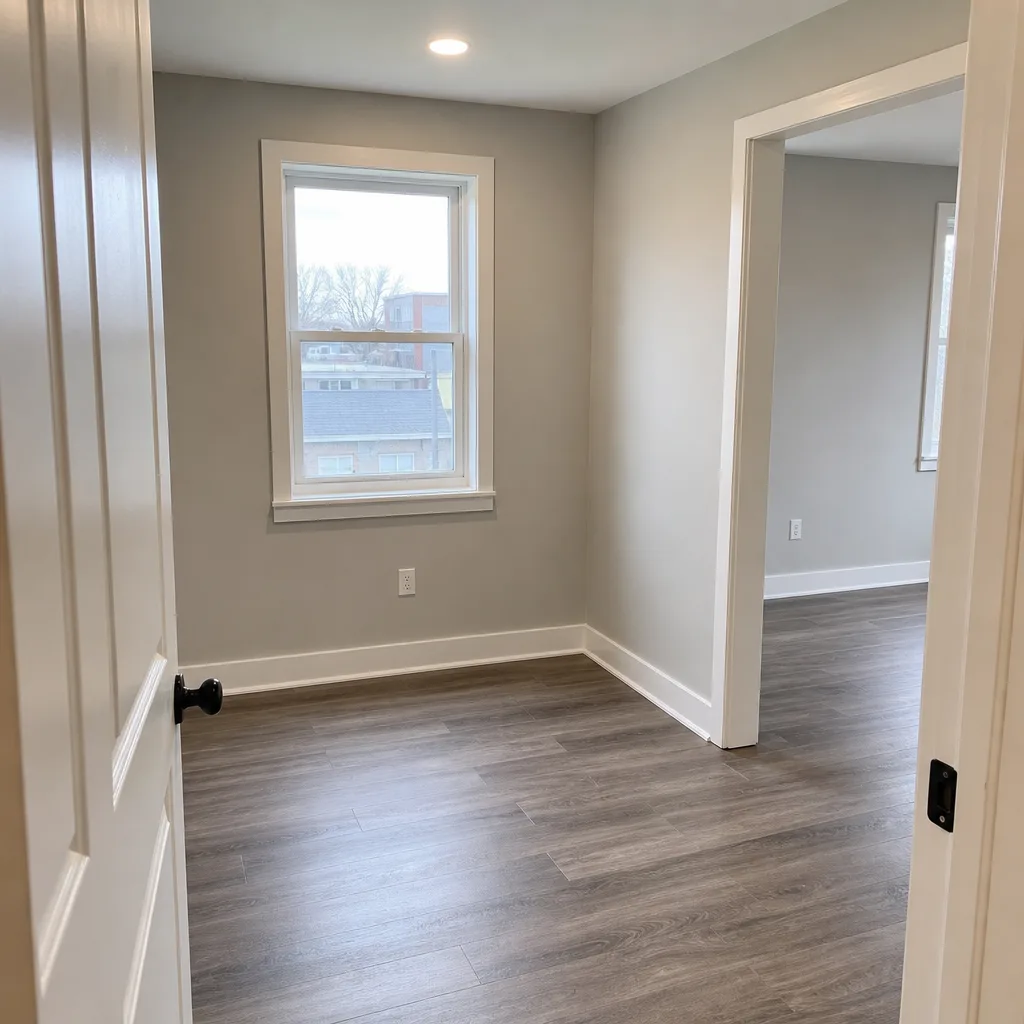 After
After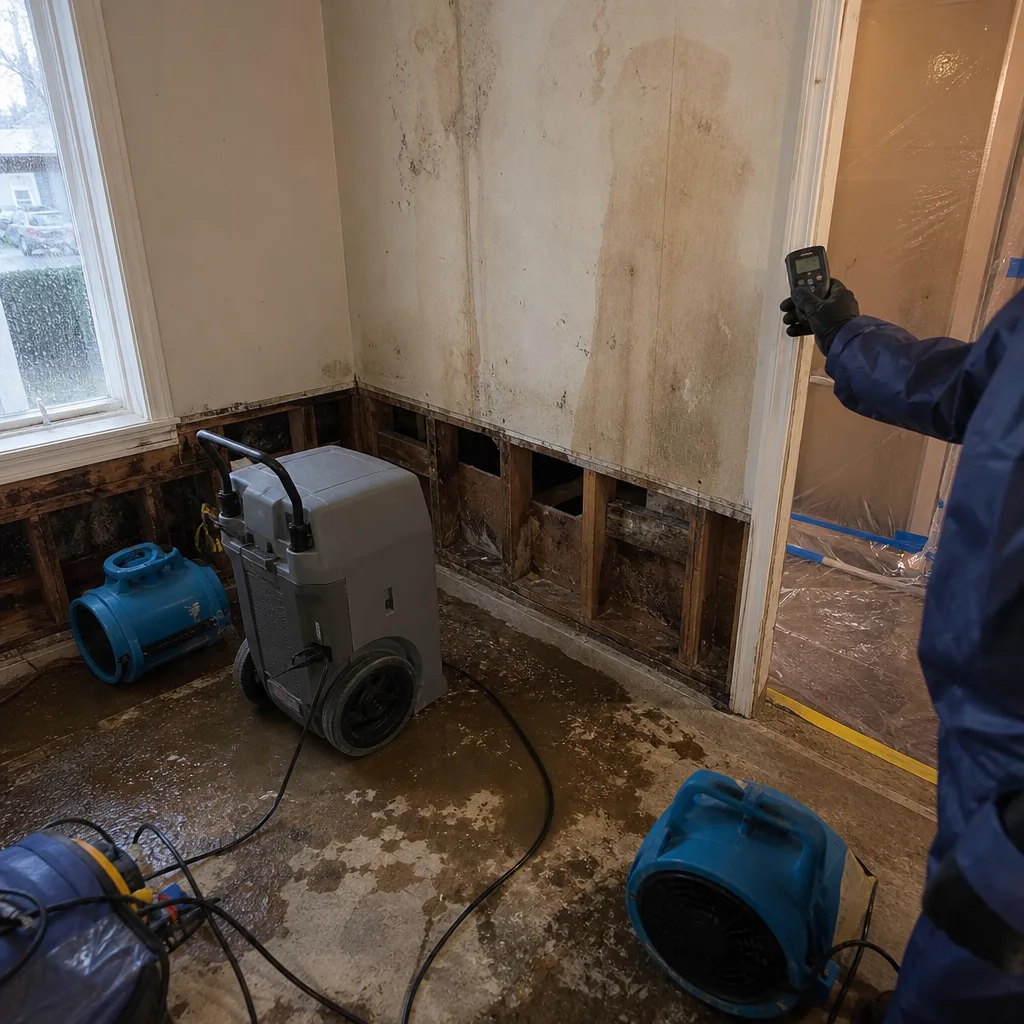 Before
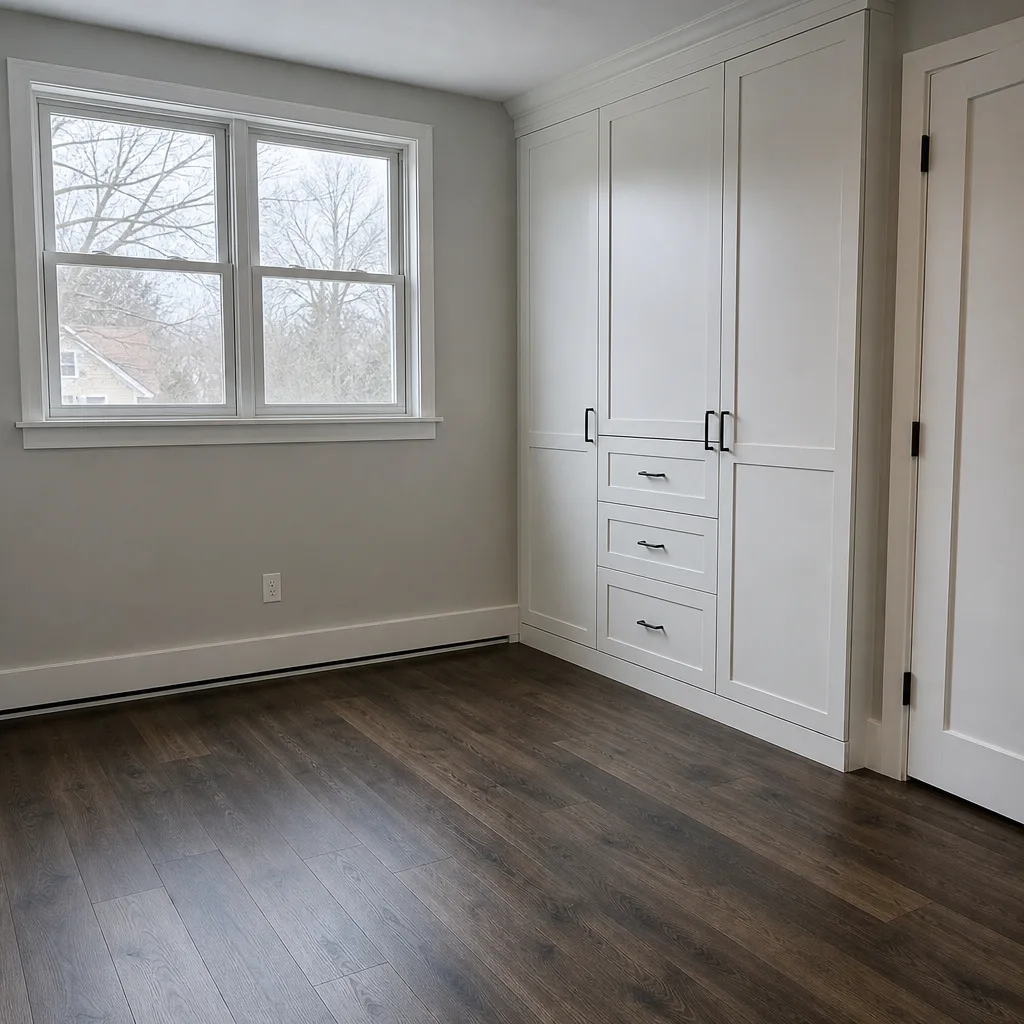 After
After24/7 Emergency Water Damage Restoration in Northeast Yonkers
Water damage in an attached Northeast Yonkers row house doesn’t wait for business hours, and neither do we. A live dispatcher answers (845) 456-6568 around the clock, every day, and a Floodline Restoration Co. crew is dispatched inside the Northeast Yonkers area with a commitment to arrive within 45 minutes. Because when a supply line bursts inside a 1930s party wall on Mile Square Road or a nor’easter sends meltwater through a parapet roof on Central Park Avenue, the first hour decides whether you’re drying one room or rebuilding two units. We start with a free visual inspection, then get extraction running the same visit so the water stops moving through your plaster and into your neighbor’s side of the shared wall. Done right, and backed in writing.
Understanding Water Damage Restoration Severity in Northeast Yonkers Properties
Here’s what most homeowners in Northeast Yonkers don’t hear until a claim gets stalled: the age and construction of your building changes how water damage has to be scoped. Category 1 water is clean, from a supply line or a bathtub overflow. Category 2 carries contaminants, like washing machine discharge or a sump pump failure. Category 3 is sewage, river water, or standing floodwater that’s been sitting long enough for bacteria to bloom. In a standalone home, one category means one drying plan. In a 1920s attached brick row house with plaster-and-lath interiors and shared party walls, moisture doesn’t respect those clean category lines. What starts as Category 1 from a corroded galvanized riser inside a wall can cross into the adjoining unit, sit in original plaster that has no vapor barrier, and present 48 hours later as damaged drywall on the neighbor’s side. That’s why our crews test and moisture-map every affected wall surface, not just the one where the water first became visible. The line the water left is where we start. What happens under the floor and behind the shared wall is where the real job happens.
Why Northeast Yonkers Property Owners Choose Floodline Restoration Co.
- 45-minute response commitment in Northeast Yonkers: When you call with a burst pipe on Midland Avenue, we’re dispatched inside 45 minutes, not 45 hours. The clock starts the moment a live person answers.
- A real person on the phone, 24/7: Two in the morning on a February night, and you get a dispatcher, not a recording. That’s been true since 2010.
- IICRC-certified crews trained to WRT and ASD standards: Water damage restoration and applied structural drying. They know what a Yonkers building inspector will ask about before the inspector gets there.
- Free visual inspection with no obligation: We walk the loss, take moisture readings, and tell you what you’re actually dealing with before any work is authorized.
- Direct insurance billing: We deal with your adjuster, your carrier, and the paperwork. You don’t play messenger between us and them.
- One team from extraction to rebuild: The same crew that sets up Dri-Eaz air movers on day one handles daily drying logs, writes the reconstruction scope, and puts your kitchen wall back together.
Our Water Damage Restoration Process
Inspection & Assessment
Every Northeast Yonkers job starts with thermal imaging and hygrometer readings on both sides of the affected area, plus a look at the adjoining unit if you share a party wall. We document what’s wet, what’s at risk, and what the Category classification actually is. You get a written scope before any work begins.
Extraction / Stabilization
Our crews run truck-mounted and portable extraction units to pull standing water from floors, wall cavities, and the original plaster assemblies common in Northeast Yonkers’s pre-war housing. We cut containment and stop the migration. The goal is to have water moving out within the first hour, not the first day.
Drying & Dehumidification
Dri-Eaz and XPOWER air movers go into every affected area, with LGR dehumidifiers sized to the cubic footage of the space, not a rule of thumb. In attached row houses we dry both sides of party walls simultaneously, because drying one side of a 1920s double-wythe brick wall does nothing for the other side.
Cleaning & Sanitization
Category 2 and Category 3 losses need antimicrobial treatment on all affected framing and materials, and we use HEPA filtration through air scrubbers while we work. For Category 1, it’s a hygienic cleaning of salvageable surfaces. Either way, it’s done to the standard that lets you live in the house, not just look at it.
Structural Drying Verification
We pull moisture readings daily and log them, then confirm the dry standard has been met across every material. That log goes to your insurance carrier and to you. In Northeast Yonkers, where a building inspector may ask for proof that a shared wall is actually dry before signing off, that log is what gets the final approval without another argument.
Repairs & Restoration
Plaster repair, drywall replacement, flooring, trim, painting. The same crew that extracted and dried does the reconstruction. When you’ve had water move through a shared wall into a neighbor’s unit, you don’t want a handoff to a third-party contractor now. There isn’t one.
Need Emergency Water Damage Restoration in Northeast Yonkers Now?
Crews minutes away, answering live 24 hours a day. The sooner we start, the less it costs.
Working With Your Insurance Company
Insurance is half the job on a water damage claim, and in Northeast Yonkers it’s the half that usually goes sideways first. Your adjuster may work both sides of the Bronx border and carry assumptions from NYC code into a Yonkers scope. That’s a known problem here, and we’ve handled it enough times to know exactly what to hand them. We document from the first hour, write estimates in the same format carriers expect, and talk directly with the adjuster so you don’t have to. Photo documentation and a daily moisture log are standard. When the source of the loss is inside a party wall and the claim involves a neighbor’s unit, we handle the coordination that keeps your claim moving instead of stalling in building code review.
What We Provide Your Insurer
- Thorough documentation of the loss
- Photos of all damage, room by room
- Moisture readings and drying logs
- A detailed, line-item scope of work
- Direct coordination with your carrier
Built for Northeast Yonkers’s Loss Calendar
There’s a rhythm to when water damage happens in Northeast Yonkers, and it runs right through the housing stock and the Hudson Valley weather. January and February bring deep freezes that test original cast-iron and galvanized supply lines in homes that predate modern insulation. When a riser lets go on a Tuesday night in a row house on Midland Avenue, the water doesn’t stay put. It finds the path of least resistance, which in a 1920s attached building is usually through the party wall into the adjoining unit. March and April turn snowmelt into basement seepage, and in Northeast Yonkers that means hydrostatic pressure against foundation walls that were never waterproofed. Summer thunderstorms dump flash rainwater faster than the combined sewer system can move it, backing up floor drains in older basements. And from November through March, nor’easters load the shallow-pitched and flat roofs on pre-war brick buildings with snow that freezes at the eaves, dams up, and forces meltwater under the roofing at parapet walls and roof-wall intersections. We see the same signature every late winter: a brown ceiling stain on the top floor that shows up two weeks after the storm, and the homeowner calls it a roof leak. Sometimes it is. Often it’s ice-dam water that’s been tracking down an uninsulated parapet wall for days.
Water Damage Restoration Across Northeast Yonkers’s Neighborhoods
Northeast Yonkers isn’t one kind of street, and the way we approach a loss changes block by block. Along Mile Square Road and the attached brick rows that run west of it, we’re almost always dealing with dual-unit containment, because the party walls in those homes share wall cavities and floor systems with the neighbor. A burst pipe on the second floor of one unit means pulling moisture readings on both sides before anyone starts drying. Down around Central Park Avenue near the Bronx border, the mix shifts to semi-detached and attached brick with shallow-roof additions that were put on decades ago, often with no insulation in the roof cavity. Those additions are where we find the ice-dam ceiling stains. The blocks around Alta Vista Drive and the streets climbing toward the Bronx River Parkway have steep grades and older foundation walls, which changes how groundwater moves during a heavy rain. Over near Dunwoodie and the stretch south of it, you get more of the same attached rowhouse construction, with shared downspouts and original clay sewer laterals under the sidewalk. Each of those blocks has its own failure pattern. We’ve worked enough of them to know what to look for before the first air mover goes down.
Specialized Water Damage Restoration Services We Offer in Northeast Yonkers
Emergency Water Extraction
When a pipe bursts inside the wall of an attached row house, the visible water on the floor is only part of the loss. We extract from floor surfaces, wall cavities, and the base of party walls, then cut containment so moisture stops migrating into the neighbor’s unit. In Northeast Yonkers this is the single most important first step, because every hour of delay means more plaster gets saturated inside a wall you can’t see.
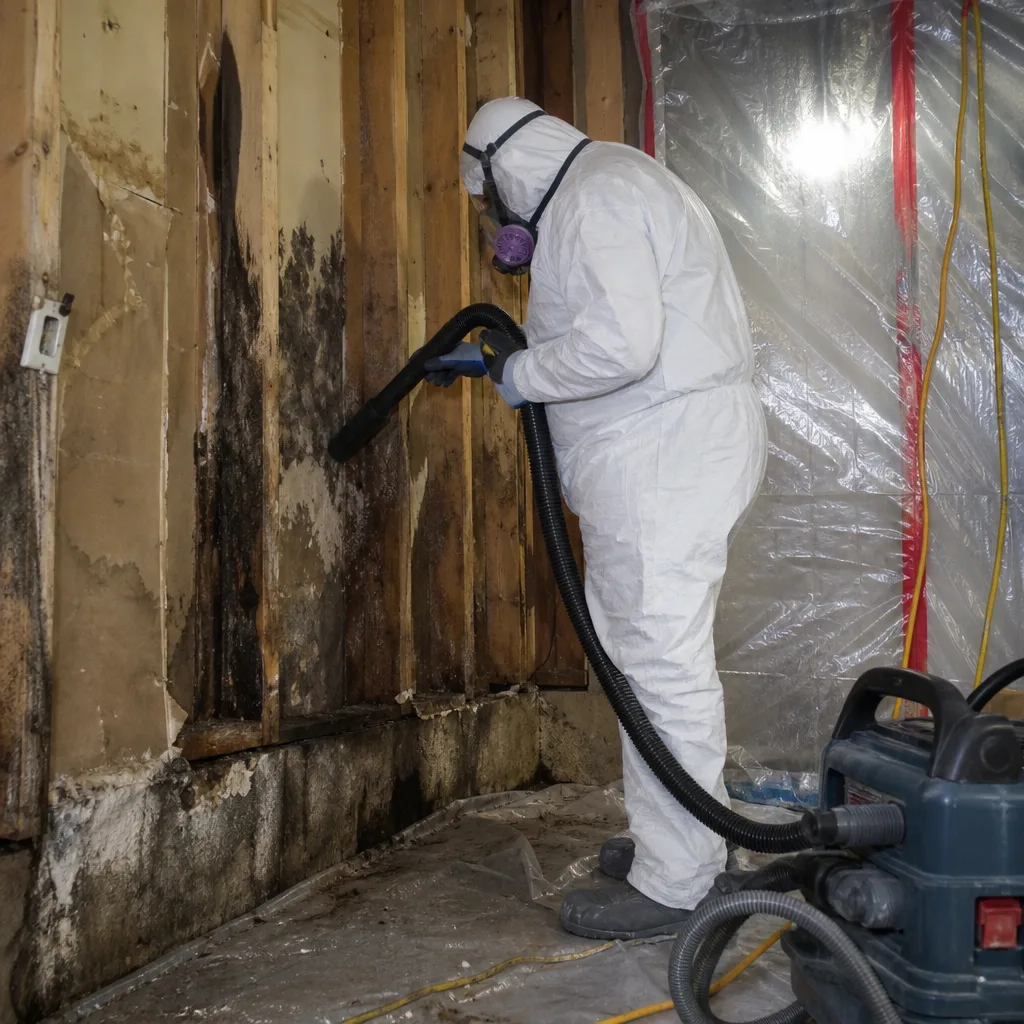
Structural Drying & Dehumidification
We run Dri-Eaz and XPOWER air movers with LGR dehumidifiers sized for the actual cubic footage of the affected space, and we pull hygrometer readings daily until every material meets the dry standard. In Northeast Yonkers’s pre-war construction, that means drying original plaster and lath assemblies in place where they’re salvageable, and documenting that the dry standard was hit on both sides of any shared wall. That documentation is what satisfies a Yonkers building inspector and keeps the claim from getting reopened.
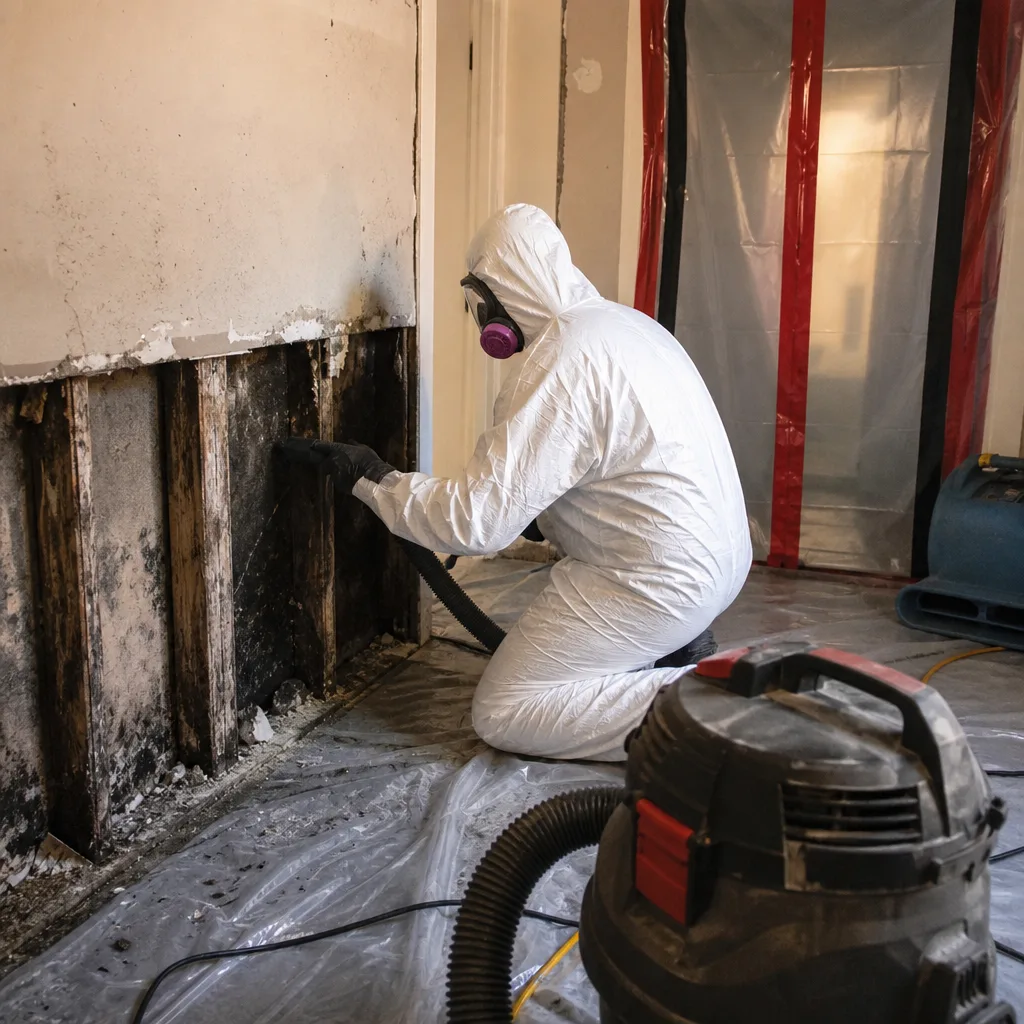
Ceiling & Roof Leak Water Damage
Northeast Yonkers has a specific late-winter problem: flat and shallow-pitched roofs on 1920s and 1930s brick buildings form ice dams at the eaves and parapet walls, and meltwater tracks down inside the wall cavity until it bleeds through the ceiling of the top-floor room. We know how to distinguish that from a plumbing leak, and we dry the ceiling cavity and wall assembly properly instead of just patching the stain and waiting for the next freeze. That distinction changes the entire scope of drying.
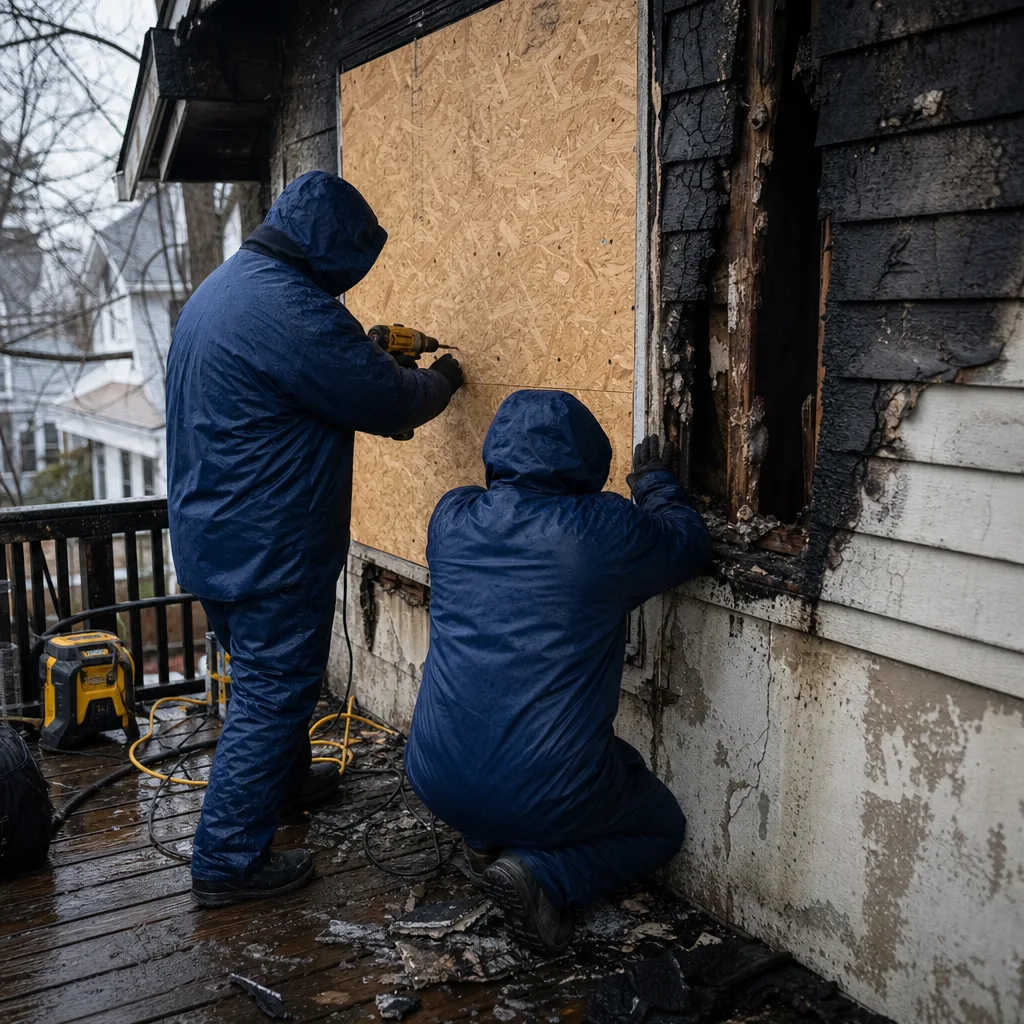
Burst Pipe Restoration
Original galvanized and cast-iron supply plumbing in Northeast Yonkers homes has passed the end of its service life, and when it fails it fails inside a wall. We locate the source, stop the flow, extract from all affected areas including the adjoining unit if needed, and then dry the structure. The restoration is structural first, cosmetic second. You can’t paint over a wet party wall.
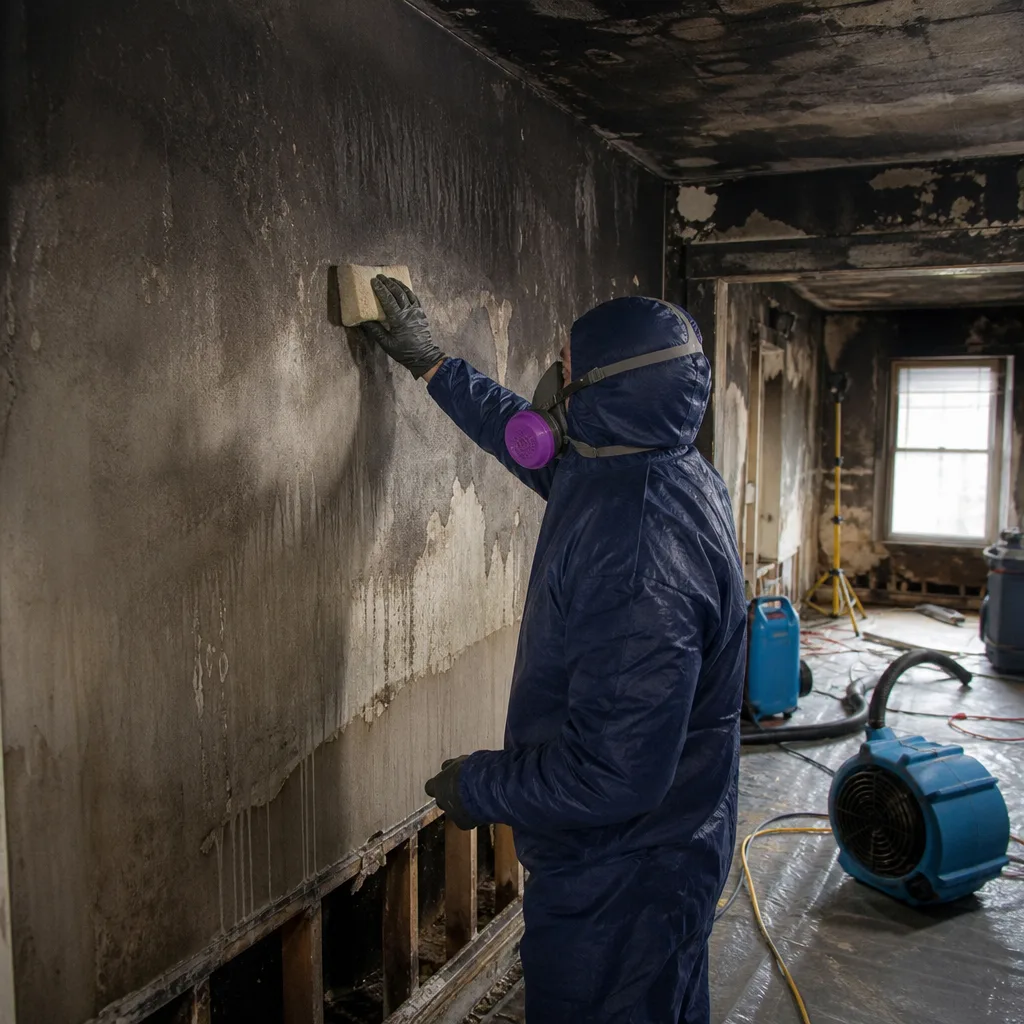
Flood Cleanup & Basement Water Removal
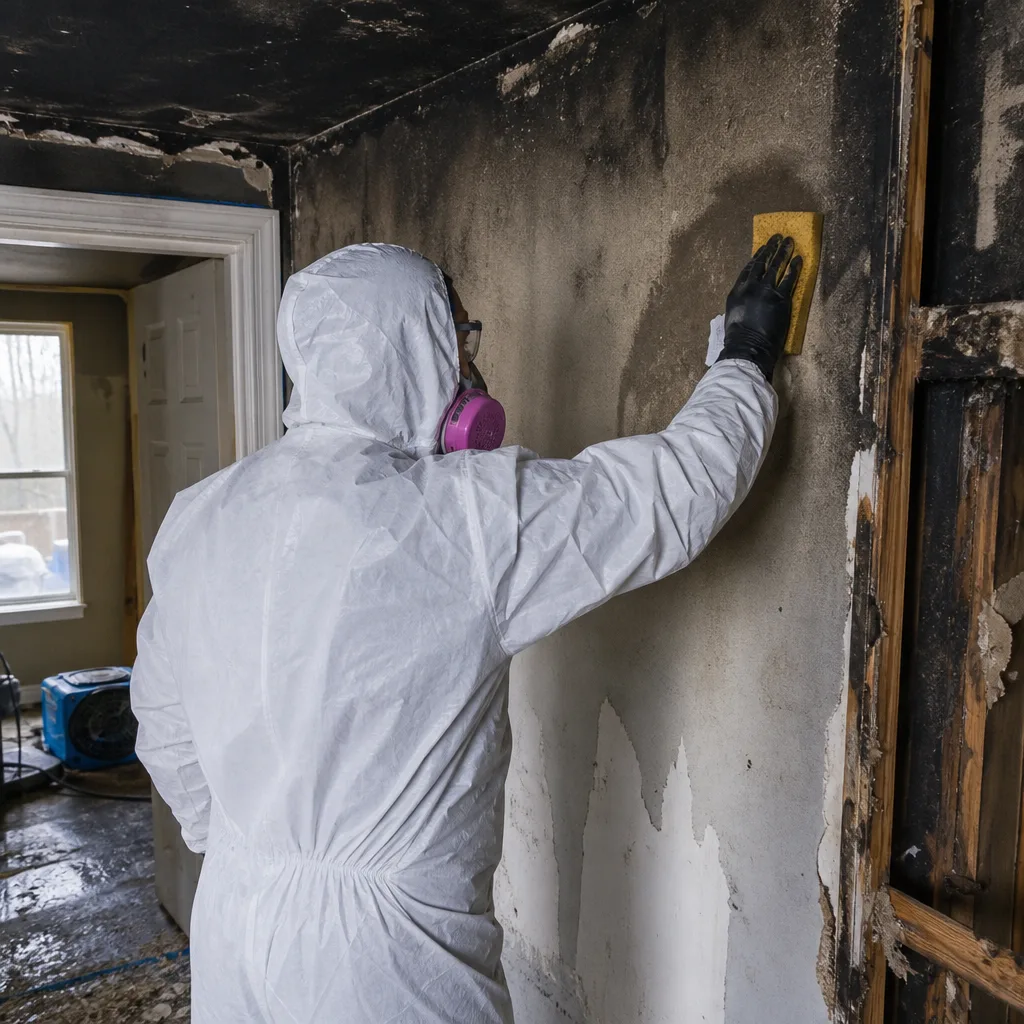
Basement seepage and storm flooding bring Category 2 or Category 3 water into Northeast Yonkers basements, and that changes what can be salvaged. We pump and extract, remove saturated materials that can’t be dried safely under Yonkers code, and sanitize the rest. If the original plaster walls are involved, we’ll tell you honestly whether they’re salvageable or whether removal is the only code-compliant option. No one should have to argue with a reinspection over materials that should have come out on day one.
What happens when you call
- 1
A real person answersNo phone trees - you reach a local pro.
- 2
You get an upfront price rangeHonest numbers before anyone is dispatched.
- 3
A background-checked tech heads outLicensed & insured, dispatched right away.
- 4
You approve before work beginsNothing starts until you say go.
Water Damage Restoration Costs in Northeast Yonkers, NY
Here’s what water damage restoration actually costs in Northeast Yonkers’s market. A typical emergency water extraction with drying in a single-family home or one unit of an attached row house runs $2,800 to $6,500 depending on affected square footage and the number of rooms involved. Structural drying with containment and daily monitoring for a party-wall loss that crosses into a neighbor’s unit runs $5,000 to $12,000 because you’re drying two sides of a shared wall and managing two access agreements, not one. Burst pipe restoration including extraction, drying, and plaster or drywall repair typically lands between $3,500 and $9,000. Ceiling and roof leak water damage from ice damming generally runs $1,800 to $5,200, with the lower end covering local drying and repair and the higher end involving parapet wall cavity work. Category 3 basement flood cleanup, with removal of saturated materials and sanitization, runs $4,000 to $11,000 depending on how much original plaster or framing has to come out. The free inspection path is the right one in this neighborhood: we’ll give you a written scope with firm numbers before any work starts, so there’s no surprise on the bill. A square deal: no surprises on the bill. Call (845) 456-6568 for an exact quote. Estimates are free.
| Service | Typical Cost in Northeast Yonkers |
|---|---|
| Emergency water extraction + drying (single unit) | $2,800 - $6,500 |
| Party-wall dual-unit drying with containment | $5,000 - $12,000 |
| Burst pipe restoration (full scope) | $3,500 - $9,000 |
| Ceiling/roof leak water damage | $1,800 - $5,200 |
| Category 3 basement flood cleanup | $4,000 - $11,000 |
We Also Serve Cities Near Northeast Yonkers
Our Water Damage Restoration in Northeast Yonkers crews also respond to losses in the communities that share this housing stock and these weather patterns: New Rochelle, Mamaroneck, Rye, and Mount Vernon. If you’re just over the line in any of those areas, the same 24/7 dispatch and the same written 90-Day Done Right Promise apply.
Serving Northeast Yonkers, NY - Our Local Coverage Area
We’re based in the Northeast Yonkers area and know this community well. Use the map below to see our service coverage - if you’re nearby, we can almost certainly help.
Northeast Yonkers Water Damage Restoration Questions, Answered
Why does water damage in my Northeast Yonkers row house so often spread to the neighbor’s unit?
Because the original 1920s party walls in Northeast Yonkers attached row houses were built with no meaningful vapor barrier and minimal fire-stopping between the two sides. When a supply line bursts inside one of those walls, the water moves laterally through the cavity and into the adjoining unit’s plaster or drywall before it ever shows up as a visible stain on your side. That’s why we moisture-map both sides of every shared wall on any attached-home loss, and why our scopes routinely include containment and drying in the neighbor’s unit. If you skip that step and dry only your side, mold blooms on the shared wall within 48 hours and you get a second claim and a very unhappy neighbor. Call (845) 456-6568 and we’ll assess both units properly.
How do I know if my ceiling stain is from ice damming or a plumbing leak?
The location and timing usually tell the story. In Northeast Yonkers, a brown ceiling stain that appears on a top-floor room two to three weeks after a nor’easter, near a parapet wall or under a flat roof section, is almost always ice-dam meltwater. A stain that appears suddenly, grows quickly, and has a water source directly above it, like a bathroom or a radiator riser, points to plumbing. We use thermal imaging and moisture meters to trace the path of the water and identify the source, then we dry the correct assembly instead of guessing. Guessing wrong means the stain comes back after the next storm. Call (845) 456-6568 and we’ll find the actual source.
The adjuster says only my unit needs drying, but my neighbor has damp drywall now. What do I do?
You tell the adjuster that this is a party-wall migration issue, not a single-unit loss. In Northeast Yonkers’s attached housing, a wet 1920s party wall transmits moisture through the shared cavity, and the neighbor’s damp drywall is evidence that water has already crossed the property line. The correct scope involves containment and drying on both sides. We can provide moisture readings from the neighbor’s side, document the migration path, and communicate directly with the adjuster to get the scope amended. That’s not a favor we’re doing you. It’s how the job has to be done. Call (845) 456-6568 and we’ll get the documentation in front of your carrier.
My basement flooded with Category 3 water. Can you dry the original plaster walls or do they have to come out?
Category 3 water, meaning sewage, river water, or standing floodwater, contaminates porous materials. Original plaster over lath in a Northeast Yonkers basement is porous, and it usually cannot be safely dried in place once it’s been saturated with Category 3 water. Yonkers code requires removal of affected materials that cannot be returned to a sanitary condition, and we follow that standard. We’ll tell you honestly on day one which walls have to come out, what stays, and what the repair scope will be. No reinspection surprises. Call (845) 456-6568 and we’ll assess it properly.
Why does my Yonkers restoration estimate include containment on both sides of a shared wall when only one side looks wet?
Because what you can see is not what’s actually wet. In Northeast Yonkers’s attached row houses, the shared wall cavity is continuous, and water that enters on one side migrates through the cavity into the adjoining unit’s wall assembly. Containment on both sides lets us control air movement, hold negative pressure, and dry the entire assembly at once. If we only dry your side, the moisture in your neighbor’s wall will move back into your cavity as soon as we pack up. The estimate includes both sides because both sides are part of the same continuous building assembly, and that’s how the job gets done right. Done right, and backed in writing. Call (845) 456-6568 for the full explanation and a free inspection.
How fast can someone actually get to my Northeast Yonkers home?
Within 45 minutes of your call, around the clock. A live dispatcher answers (845) 456-6568, takes your address, and sends the nearest available certified crew. We don’t route calls through a national call center. The dispatcher knows this area, knows which streets are party-wall attached rows and which are semis, and gets the right crew moving. Your first hour after a water loss is the most expensive hour if the water keeps moving, so we don’t waste it.
Will my insurance cover water damage restoration in Northeast Yonkers?
Most homeowner policies cover sudden and accidental water damage, like a burst pipe or an ice-dam ceiling event. They typically do not cover gradual seepage or lack of maintenance, which is common on pre-war foundations in Northeast Yonkers. The issue here is usually not whether there’s coverage, but whether the adjuster’s scope correctly accounts for the structure you actually live in. We write line-item scopes, document everything with photos and moisture logs, and deal directly with your adjuster. Direct insurance billing means you aren’t fronting cash and hoping for reimbursement. Call (845) 456-6568 and we’ll walk through what your policy likely covers.
What should I do in the first 30 minutes after discovering water damage?
Shut off the water at the main if you can do so safely, then call (845) 456-6568. Don’t wade into standing water if you suspect electrical contact anywhere. Don’t try to dry the wall yourself with a box fan; you’ll just push moisture deeper into the plaster. In an attached Northeast Yonkers row house, knock on the neighbor’s door and let them know they should check the wall you share. Then step back and let us do the rest. We’ll be there when we say.
Written by Curt Bowman, Owner at Floodline Restoration Co., serving Northeast Yonkers since 2010.